

Editorial Information
| Editorial detail | Information |
|---|---|
| Written by | Editorial Team |
| Published | August 25, 2026 |
| Last updated | August 25, 2026 |
| Research conducted | August 2026 |
| Products considered | Home Assistant, Hubitat, Homey, Samsung SmartThings/Aeotec, Aqara, Apple Home, Amazon Alexa, and Google Home controllers |
| Testing status | Independent desk research and feature verification; no controlled hands-on testing was conducted |
| Research methodology | Official U.S. product pages, protocol documentation, current prices, compatibility information, subscription requirements, and support policies were reviewed |
| Editorial disclosure | Rankings were determined independently based on compatibility, local control, automation capability, privacy, usability, cost, and long-term value. No paid placement influenced the order. |
Last Checked: August 25, 2026
Review Due: September 25, 2026
Next Update Due: November 25, 2026
Smart-home platforms change through software updates. This guide should be reviewed sooner if a listed hub is discontinued, receives a major protocol update, or changes price or subscription terms.
Key Takeaways
- The Hubitat Elevation C-8 Pro Thread Special Edition is our best overall smart home hub because it combines strong local automation with Zigbee, Z-Wave, Matter, and Thread support.
- Home Assistant Green offers the greatest integration flexibility and is the strongest option for privacy-focused enthusiasts, but Zigbee, Thread, and Z-Wave require separate radio hardware.
- Homey Pro 2026 provides broad multi-protocol support and a polished interface, but its $449 price is difficult to justify for a simple smart home.
- The Aeotec Smart Home Hub 2 offers an easier SmartThings experience but no longer includes Z-Wave.
- Aqara Hub M3 is an effective choice for Aqara devices, local automations, Matter, Thread, and infrared control.
- Apple, Alexa, and Google users may not need a separate hub if an existing speaker, display, or streaming device already provides the required Matter and Thread functions.
- Matter improves interoperability, but it does not guarantee that every feature of every device will appear in every ecosystem.
- A Matter controller and a Thread border router perform different jobs, even when both functions are built into the same device.
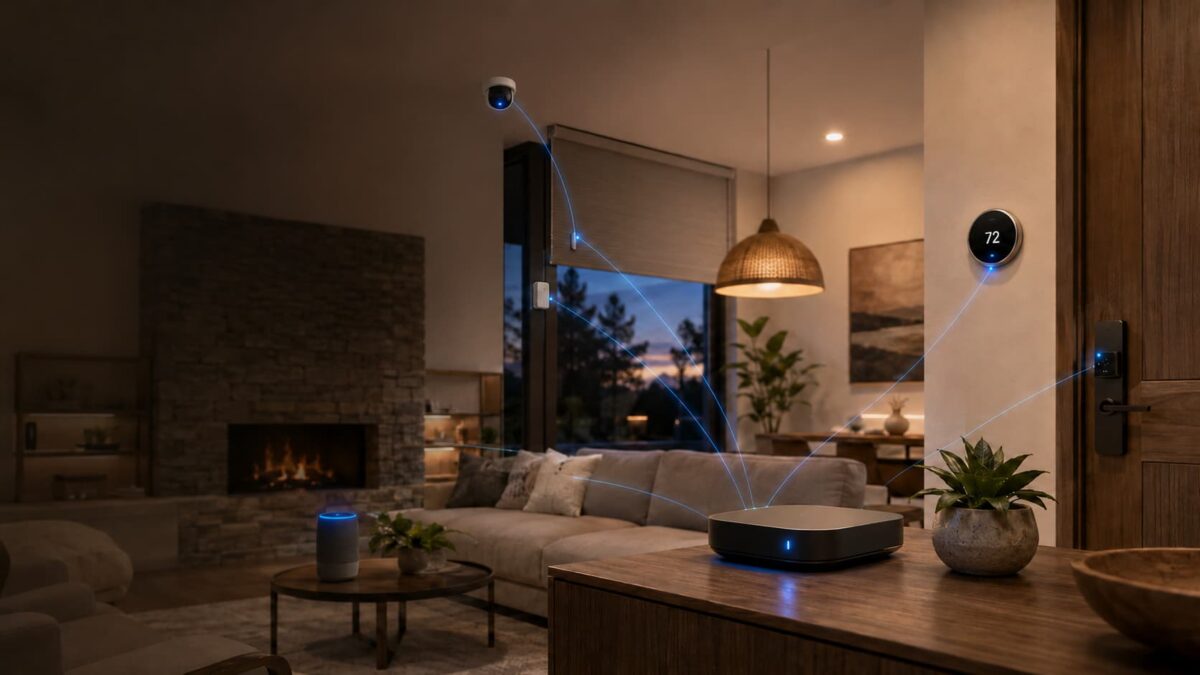
A smart home becomes difficult to manage when lights, locks, sensors, cameras, and thermostats depend on separate applications. A hub creates a central control layer, but the right model depends on the devices and wireless protocols already inside the home.
Matter has made it easier to connect products across Apple Home, Alexa, Google Home, Samsung SmartThings, and other platforms. Thread can provide a low-power mesh network for compatible devices. However, neither technology makes all hubs equivalent. Advanced automation, local processing, device features, privacy, and support still vary considerably.
For this guide, a “smart home hub” can be a dedicated hardware controller, an officially supported home-automation computer, or a speaker, display, router, or streaming device with meaningful hub functions. These different product types should not be treated as interchangeable.
We ranked the following controllers according to compatibility, local operation, reliability, automation flexibility, setup difficulty, privacy, current U.S. cost, and long-term value. We did not personally test the products.
Quick Comparison
| Hub | Best for | Matter and Thread | Other built-in protocols | Local control | Price* |
|---|---|---|---|---|---|
| Hubitat Elevation C-8 Pro Thread Special Edition | Best overall | Matter controller and Thread | Zigbee, Z-Wave, Bluetooth, Wi-Fi, Ethernet | Strong | $259.95 |
| Home Assistant Green | Advanced automation | Matter through software; radios require accessories | Ethernet; USB radios optional | Excellent | $199 |
| Homey Pro 2026 | Premium all-in-one control | Matter and Thread | Zigbee, Z-Wave, Bluetooth, Wi-Fi, IR | Strong | $449 |
| Aeotec Smart Home Hub 2 | SmartThings users | Matter controller and Thread border router | Zigbee, Bluetooth, Wi-Fi, Ethernet | Partial/local-first | About $119.99 |
| Aqara Hub M3 | Aqara and Matter homes | Matter controller, bridge, and Thread | Zigbee, Bluetooth, Wi-Fi, IR, PoE | Strong for supported devices | $159.99 |
| Apple HomePod mini | Apple Home users | Matter controller and Thread border router | Wi-Fi, Bluetooth | Supported Apple Home functions | $129 |
| Amazon Echo Show 8 | Alexa households | Matter and Thread | Zigbee, Bluetooth, Wi-Fi | Mixed local/cloud | $114.99 sale |
| Google TV Streamer 4K | Google Home users | Matter controller and Thread border router | Wi-Fi, Bluetooth, Ethernet | Mixed local/cloud | $74.99 sale |
*Prices were checked on August 25, 2026, and exclude tax. Promotional prices can change without notice.
Our Top Picks
- Best overall: Hubitat Elevation C-8 Pro Thread Special Edition
- Best for advanced local automation: Home Assistant Green
- Best premium all-in-one hub: Homey Pro 2026
- Best for SmartThings: Aeotec Smart Home Hub 2
- Best for Aqara devices: Aqara Hub M3
- Best for Apple Home: Apple HomePod mini
- Best for Alexa: Amazon Echo Show 8
- Best for Google Home: Google TV Streamer 4K
1. Hubitat Elevation C-8 Pro Thread Special Edition — Best Overall
Hubitat earns first place because it combines broad radio support, strong local processing, extensive automation tools, and a subscription-free core experience.
The Thread Special Edition includes Zigbee, a U.S.-frequency Z-Wave 800-series radio, Z-Wave Long Range, Thread, Bluetooth, Wi-Fi, Ethernet, and Matter-controller support. Hubitat says rules run locally, helping supported automations continue during internet interruptions.
Hubitat lists the standard C-8 Pro at $188.95 and the Thread Special Edition at $259.95. Buyers who specifically want integrated Thread should select the more expensive special edition. Hubitat’s official store documents the current prices and radio differences.
Why It Stands Out
Some hubs are easy to use but limited, while advanced platforms often require assembling hardware or learning a technical interface. Hubitat sits between those extremes.
Its Rule Machine and other built-in automation applications can create routines with multiple conditions, restrictions, and actions. Local processing reduces dependence on remote servers for supported devices and automations.
Key Features
- Matter-controller support
- Integrated Thread in the special edition
- Zigbee 3.0
- Z-Wave 800 series and Z-Wave Long Range
- Bluetooth, Wi-Fi, and Ethernet
- External Zigbee and Z-Wave antennas
- Local rule processing
- Customizable dashboards
- No required subscription for core automation
Strengths
- Broad protocol support in one dedicated controller
- Strong local automation
- Suitable for complex routines
- Zigbee and Z-Wave support
- Works with many brands without requiring one dominant ecosystem
- Lower cost than Homey Pro
Weaknesses
- Less beginner-friendly than Alexa, Apple Home, or Google Home
- Interface design can feel functional rather than polished
- Some integrations require community drivers or manual configuration
- Thread requires the $259.95 special edition
- Compatibility still needs to be checked device by device
Compatibility, Cost, and Requirements
The Thread Special Edition costs $259.95 and includes the radios needed for Zigbee, Z-Wave, and Thread networks. An Ethernet cable and U.S. power supply are included.
Hubitat advertises compatibility with more than 1,000 devices across more than 100 brands. This does not mean every product or function from those brands is supported.
Choose This Hub If:
- You want Zigbee and Z-Wave in one local-first controller.
- You need more advanced routines than mainstream voice platforms provide.
- You want to avoid a mandatory subscription.
- You prefer a ready-made appliance over building a Home Assistant system.
Consider Another Hub If:
- You want the easiest possible setup.
- Your entire home already runs smoothly in Apple Home, Alexa, or Google Home.
- You want the broadest software-integration library and do not mind technical maintenance.
Our Verdict
Hubitat provides the best overall balance of local processing, protocol support, automation depth, cost, and independence. Home Assistant remains more flexible, but Hubitat requires less assembly and ongoing technical management.
2. Home Assistant Green — Best for Advanced Local Automation
Home Assistant Green is the strongest option for users who value privacy, customization, integrations, dashboards, and local control more than simple setup.
Home Assistant Green is a dedicated computer running Home Assistant. It should not be confused with a fully equipped multi-radio hub. Ethernet is built in, but Zigbee, Thread, and Z-Wave require compatible USB radios or other network-based coordinators.
The official recommended U.S. price was $199 at the time of research. Home Assistant’s product page describes Green as the easiest official method for running Home Assistant.
Why It Stands Out
Home Assistant can unite products that normally live in separate ecosystems. Its automation system supports detailed triggers, conditions, actions, scripts, helpers, dashboards, energy monitoring, and device-state history.
A properly configured installation can keep many essential automations inside the home. However, local capability depends on the individual integration. A cloud-based device does not automatically become local simply because it appears in Home Assistant.
Key Features
- Dedicated official Home Assistant hardware
- Local automation engine
- Extensive integration catalog
- Custom dashboards
- Powerful scripts and conditions
- Backup and migration options
- Optional remote access through Home Assistant Cloud
- Expandable through USB or network-based radios
Strengths
- Exceptional automation flexibility
- Strong privacy potential
- Broad integration support
- Detailed dashboards and monitoring
- Active open-source ecosystem
- No mandatory subscription for local use
- Can combine several smart-home platforms
Weaknesses
- No built-in Zigbee, Thread, or Z-Wave radio
- More technical than mainstream platforms
- Some integrations require maintenance after updates
- Secure remote access requires configuration or an optional cloud service
- Users remain responsible for backups and system health
Compatibility, Cost, and Requirements
Home Assistant Green costs $199 before radio accessories. Buyers may need a Zigbee/Thread adapter, Z-Wave adapter, suitable extension cable, and optional Home Assistant Cloud subscription.
Thread support also requires careful planning. A radio capable of Thread does not always mean a complete Thread border-router configuration is automatically available.
Choose This Hub If:
- You want deep local automation and customization.
- You are comfortable managing integrations and backups.
- Privacy is a leading concern.
- You need to combine products from several ecosystems.
Consider Another Hub If:
- You want a simple plug-in-and-forget appliance.
- You do not want to purchase or configure separate radios.
- Other household members need an extremely simple interface.
Our Verdict
Home Assistant Green is the most capable platform in this ranking, but it is not the easiest universal recommendation. It is best for technically confident households willing to manage a powerful local controller.
3. Homey Pro 2026 — Best Premium All-in-One Hub
Homey Pro 2026 is the broadest ready-made multi-protocol alternative for users who want advanced automation without assembling a Home Assistant system.
It supports Matter, Thread, Zigbee, Z-Wave, Bluetooth LE, Wi-Fi, infrared, and region-dependent 433 MHz functionality. The 2026 hardware doubled memory to 4GB while retaining the platform and radio design of the earlier Homey Pro.
Homey increased the U.S. price from $399 to $449 on June 1, 2026. The company says remote access, applications, dashboards, and cloud features are included without an additional mandatory subscription. It also states that the 2023 and 2026 models will receive support through at least June 2031. Homey’s official announcement explains the hardware, protocols, and support period, while its price notice confirms the $449 U.S. price.
Why It Stands Out
Homey’s Flow and Advanced Flow systems provide a more visual way to create complex automations than many enthusiast-oriented platforms. The app system also helps the hub communicate with products from numerous brands.
Unlike Home Assistant Green, Homey Pro includes most important radios. Ethernet requires an optional adapter, however, and 433 MHz transmission is disabled in the United States and Canada because of regional requirements.
Strengths
- Extensive built-in protocol support
- Visual automation builder
- Strong local operation with limited cloud dependence
- Attractive mobile and web applications
- No mandatory subscription for the complete Pro experience
- Official support commitment through at least June 2031
Weaknesses
- $449 is expensive for a smart home hub
- Ethernet requires an optional adapter
- 433 MHz functionality is region-dependent
- Application support still varies by brand and device
- Less open and customizable than Home Assistant
Compatibility, Cost, and Requirements
Homey Pro 2026 costs $449. The Ethernet adapter is optional and adds to the total. Remote access and the Homey application store are included without a separate monthly fee.
Choose This Hub If:
- You want broad protocol support in one polished device.
- You prefer visual automations.
- You want advanced control without building your own controller.
- You have a large mixed-brand device collection.
Consider Another Hub If:
- Your smart home is simple.
- You mainly use one ecosystem.
- You want an inexpensive controller.
- You require the openness of Home Assistant.
Our Verdict
Homey Pro is the strongest premium all-in-one hub, but many households will not use enough of its capabilities to justify the $449 price.
4. Aeotec Smart Home Hub 2 — Best for SmartThings
The Aeotec Smart Home Hub 2 is designed for people who want Samsung SmartThings on dedicated hardware rather than relying on hub functions inside a television or appliance.
The current fourth-generation model supports Matter, Thread, Zigbee, Bluetooth, Ethernet, and Wi-Fi. Unlike the older Aeotec Smart Home Hub, the Hub 2 does not include Z-Wave. That difference is critical for homes with existing Z-Wave locks, switches, and sensors.
Current U.S. specialist-retailer pricing was approximately $119.99. Availability should be confirmed because the transition between Aeotec generations may cause older and newer products to appear under similar names.
Why It Stands Out
SmartThings provides a relatively approachable application, broad brand relationships, and an established automation system. The Hub 2 also emphasizes more local processing than earlier cloud-centered SmartThings deployments.
However, not every SmartThings integration or routine works without an internet connection. Local behavior depends on the device, driver, and automation.
Key Features
- Matter controller
- Thread border router
- Zigbee 3.0
- Bluetooth for onboarding and diagnostics
- Ethernet and Wi-Fi
- iOS and Android SmartThings applications
- Alexa, Google Assistant, and Bixby integrations
- Samsung Knox security foundation
Strengths
- Accessible SmartThings interface
- Matter, Thread, and Zigbee in one device
- Suitable for beginners and intermediate users
- Ethernet included
- Broad device ecosystem
- Lower price than Hubitat or Homey Pro
Weaknesses
- No Z-Wave in the current generation
- Some functions remain cloud-dependent
- SmartThings compatibility varies by device type and driver
- Product naming may cause confusion with the older Aeotec hub
Compatibility, Cost, and Requirements
The Hub 2 is available for approximately $119.99. It requires a Samsung account and the SmartThings app. Check the model number and radio specifications before purchasing.
Choose This Hub If:
- You want a dedicated SmartThings controller.
- You use Zigbee, Matter, or Thread devices.
- You want a simpler interface than Home Assistant or Hubitat.
- Z-Wave is not part of your home.
Consider Another Hub If:
- You own Z-Wave devices.
- Fully local automation is essential.
- You want extensive scripting and customization.
Our Verdict
The Aeotec Smart Home Hub 2 is a practical SmartThings controller, but removing Z-Wave makes it less versatile than Hubitat for established multi-protocol homes.
5. Aqara Hub M3 — Best for Aqara Devices
The Aqara Hub M3 is the most appropriate controller for homes built around Aqara sensors, switches, locks, shades, and security accessories.
It supports Zigbee 3.0, Thread, Matter, Bluetooth 5.1, dual-band Wi-Fi, Power over Ethernet, and infrared control. It can act as a Matter controller and expose supported Aqara Zigbee products to other Matter platforms.
Aqara lists the Hub M3 for $159.99 in the United States. Aqara’s official store confirms its price, radios, local automation features, encrypted storage, and ecosystem integrations.
Why It Stands Out
The M3 prioritizes local automations for supported Aqara products. It also has no camera or microphone, includes 8GB of encrypted local storage, and supports wired networking through Power over Ethernet.
Its infrared transmitter can control some traditional televisions and air conditioners. However, infrared state tracking is inherently less reliable when another remote changes the appliance independently.
Strengths
- Strong Aqara integration
- Matter controller and Matter bridge
- Thread and Zigbee support
- Local automations for supported devices
- Power over Ethernet
- No built-in camera or microphone
- Infrared control
Weaknesses
- No Z-Wave
- Best functionality remains centered on Aqara products
- Third-party Matter features vary
- USB power adapter is not included
- Infrared device status may not always remain synchronized
Compatibility, Cost, and Requirements
The M3 costs $159.99. It supports Apple Home, Alexa, Google Home, SmartThings, and Aqara Home integrations. A suitable USB power adapter or PoE equipment may be required.
Choose This Hub If:
- You own several Aqara devices.
- You want to bridge supported Aqara Zigbee products into Matter.
- You value local automations and wired networking.
- You need infrared control.
Consider Another Hub If:
- You use Z-Wave.
- You want the broadest third-party integration library.
- Aqara products make up only a small part of your home.
Our Verdict
The Hub M3 is an effective Aqara-centered controller with useful Matter and Thread functions. It is not as universally flexible as Hubitat, Homey, or Home Assistant.
6. Apple HomePod Mini — Best for Apple Home
The HomePod mini is the easiest dedicated Apple Home hub for most iPhone households. It provides Siri voice control, remote accessory access, Matter-controller functionality, and Thread networking in a compact smart speaker.
Apple lists the HomePod mini at $129. Apple’s U.S. store identifies it as a smart home hub and confirms the current price.
Why It Stands Out
Apple Home emphasizes a clean interface, household access, voice control, and integration with iPhones, iPads, Apple Watches, and Macs. A HomePod mini also functions as a speaker and contains temperature and humidity sensors.
Apple Home supports useful scenes and automations, but it does not provide the same scripting or mixed-protocol control as Home Assistant or Hubitat. Zigbee and Z-Wave devices normally require a compatible bridge.
Strengths
- Simple setup for iPhone users
- Matter and Thread support
- Siri voice control
- Compact smart speaker
- Apple-focused privacy model
- Remote control and household access
Weaknesses
- Requires an Apple-centered household
- No Zigbee or Z-Wave
- Fewer advanced automation options
- Some products require manufacturer bridges
- More expensive than its previous $99 price
Compatibility, Cost, and Requirements
The HomePod mini costs $129 and requires an iPhone or iPad for setup. It works best with Apple Home and HomeKit-certified or Matter-compatible devices.
Choose This Hub If:
- Your household uses iPhones.
- You want simple Apple Home control.
- You use Matter-over-Thread devices.
- You also want a compact Siri speaker.
Consider Another Hub If:
- Household members primarily use Android.
- You need Zigbee or Z-Wave.
- You want complex conditional automations.
- You need a cross-platform administration interface.
Our Verdict
The HomePod mini is the most sensible Apple Home starting point, but it should not be mistaken for a universal multi-protocol controller.
7. Amazon Echo Show 8 — Best for Alexa
The third-generation Echo Show 8 combines a smart display, Alexa voice assistant, and built-in hub functions. It can pair with compatible Zigbee, Matter, and Thread devices without a separate controller.
Amazon was selling the Echo Show 8 for $114.99 during research, although the normal price and promotions may vary. Amazon’s current product listing confirms its 8-inch display and support for Zigbee, Matter, Thread, Bluetooth, and Wi-Fi.
Why It Stands Out
A display is useful for viewing cameras, controlling lights, answering a video doorbell, adjusting thermostats, and running touchscreen routines. Alexa also works with a large selection of cloud-connected products.
The tradeoff is greater cloud and account dependence than local-first platforms. Compatibility with Alexa does not mean a product will operate locally or expose every feature through Matter.
Strengths
- Alexa voice control
- Built-in display
- Zigbee, Matter, and Thread support
- Video calling and camera viewing
- Accessible setup for existing Alexa users
- Can replace a separate smart display
Weaknesses
- Greater cloud dependence
- Less advanced automation than Hubitat or Home Assistant
- Privacy-sensitive users may not want a camera and microphones
- Certain features and services require subscriptions
- Promotional price can change
Compatibility, Cost, and Requirements
The researched promotional price was $114.99. An Amazon account and Alexa app are required. Some entertainment, security, and monitoring features may require separate subscriptions.
Choose This Hub If:
- Your home already uses Alexa.
- You want a display for cameras and controls.
- You own compatible Zigbee or Matter devices.
- Voice control is more important than advanced local automation.
Consider Another Hub If:
- Privacy and minimal cloud dependence are priorities.
- You need complex local routines.
- You want Z-Wave support.
Our Verdict
The Echo Show 8 is a practical Alexa hub for mainstream households. It is better as a voice-and-display controller than as the foundation for a highly customized local smart home.
8. Google TV Streamer 4K — Best for Google Home
The Google TV Streamer 4K combines media streaming with Matter-controller and Thread border-router functions. It is a logical choice for Google Home users who also need a streaming device.
Google listed it for $74.99 during research, reduced from $99.99. It includes Ethernet, Wi-Fi, Bluetooth, 32GB of storage, Matter support, and a Thread border router. Google’s official specifications confirm these features and the promotional price.
Why It Stands Out
The Google TV Streamer can add a Thread border router and Matter controller without requiring another dedicated box. It also offers a television-based smart-home control panel and a conventional Google TV streaming experience.
It does not include Zigbee or Z-Wave. Its automation depth is also modest compared with Home Assistant, Hubitat, or Homey.
Strengths
- Matter controller and Thread border router
- Ethernet connection
- Google Home integration
- Television-based smart-home controls
- Useful 4K media streamer
- Competitive promotional price
Weaknesses
- No Zigbee or Z-Wave
- Requires a television and separate HDMI cable
- Limited advanced automation
- Some third-party devices depend on cloud integrations
- Less useful for households outside Google Home
Compatibility, Cost, and Requirements
The Google TV Streamer was advertised for $74.99, reduced from $99.99. A Google account, television, network connection, and separately purchased HDMI cable are required.
Choose This Hub If:
- You use Google Home.
- You need a 4K streaming device.
- You want Matter and Thread support.
- You have no need for Zigbee or Z-Wave.
Consider Another Hub If:
- You need advanced local automations.
- You own many Zigbee or Z-Wave devices.
- You do not want your hub tied to a television setup.
Our Verdict
The Google TV Streamer is a good dual-purpose purchase, but it is an ecosystem controller rather than a full multi-protocol automation hub.
Which Smart Home Hub Is Best for You?
| Your priority | Recommended hub | Reason |
|---|---|---|
| Best overall balance | Hubitat C-8 Pro Thread Special Edition | Broad radios and strong local automation |
| Maximum automation flexibility | Home Assistant Green | Extensive integrations, scripts, and dashboards |
| Premium all-in-one control | Homey Pro 2026 | Multiple radios and polished visual automations |
| SmartThings ecosystem | Aeotec Smart Home Hub 2 | Dedicated current-generation SmartThings hardware |
| Aqara products | Aqara Hub M3 | Local Aqara control and Matter bridging |
| Apple Home | HomePod mini | Simple Apple integration and Thread support |
| Alexa | Echo Show 8 | Voice, display, Zigbee, Matter, and Thread |
| Google Home | Google TV Streamer | Matter, Thread, Ethernet, and media streaming |
| Zigbee and Z-Wave | Hubitat C-8 Pro | Both radios are integrated |
| Privacy-focused control | Home Assistant Green | Strong local-control potential |
| Visual automation building | Homey Pro 2026 | Flow and Advanced Flow |
| Renters and simple starter homes | HomePod mini, Echo Show 8, or Google TV Streamer | Easy to move and reset |
Smart Home Hubs Compared by Capability
| Capability | Best hub or controller | Why |
|---|---|---|
| Beginner setup | HomePod mini or Echo Show 8 | Simple ecosystem-led setup |
| Matter and Thread | Hubitat Thread Edition, Homey Pro, or Aqara M3 | Dedicated controllers with broader automation options |
| Zigbee and Z-Wave | Hubitat C-8 Pro or Homey Pro | Both protocols are integrated |
| Local automation | Home Assistant or Hubitat | Strong local rule engines |
| Mixed-brand compatibility | Home Assistant | Extensive integration catalog |
| Voice control | Echo Show 8 | Alexa is central to the experience |
| Privacy | Home Assistant Green | Can minimize cloud dependence |
| Advanced automation | Home Assistant Green | Detailed conditions, scripts, and integrations |
| Subscription-free core use | Hubitat, Home Assistant, Homey Pro, or Aqara M3 | Core local functions do not require monthly plans |
| Apple integration | HomePod mini | Native Apple Home controller |
| Google Home | Google TV Streamer | Native Google Home and Thread functions |
Smart Home Hub Costs and Requirements
The purchase price does not represent the complete cost in every case.
| Product | Hardware cost | Possible additional costs |
|---|---|---|
| Hubitat C-8 Pro Thread Edition | $259.95 | Optional cloud services or third-party integrations |
| Home Assistant Green | $199 | Zigbee/Thread radio, Z-Wave adapter, optional cloud subscription |
| Homey Pro 2026 | $449 | Optional Ethernet adapter or Homey Bridge |
| Aeotec Smart Home Hub 2 | About $119.99 | Compatible devices and optional services |
| Aqara Hub M3 | $159.99 | Power adapter or PoE equipment |
| HomePod mini | $129 | Manufacturer bridges and optional Apple services |
| Echo Show 8 | $114.99 sale | Optional Alexa, security, or entertainment subscriptions |
| Google TV Streamer | $74.99 sale | HDMI cable and optional streaming subscriptions |
Homey Pro may justify its price when it replaces several bridges and supports a large mixed-brand installation. It is poor value for someone controlling only a few Matter lights.
Home Assistant Green begins at a reasonable price, but adapters increase the total. Its value comes from flexibility, privacy, and long-term customization rather than an all-inclusive hardware package.
The ecosystem controllers offer excellent value when the household also needs their secondary function. A HomePod mini is also a speaker, an Echo Show is a display, and the Google TV Streamer is a media player.
Do You Need a Dedicated Smart Home Hub?
You may not need a dedicated controller if your smart home contains a small number of Matter-compatible products and you already own a suitable Apple, Amazon, Google, or SmartThings controller.
An ecosystem controller is usually sufficient when:
- You use one primary voice assistant.
- Your automations are relatively simple.
- Most devices are Matter-compatible or certified for that ecosystem.
- You do not own Zigbee or Z-Wave products requiring another bridge.
- You accept some cloud dependence.
A dedicated hub becomes more valuable when:
- You own devices from several ecosystems.
- You need Zigbee or Z-Wave.
- Automations must contain several conditions and actions.
- Important routines should continue during an internet outage.
- You want detailed dashboards, energy monitoring, or scripts.
- Privacy and local data handling are priorities.
- You want to reduce dependence on manufacturer cloud services.
Brand-specific bridges may still be necessary. Matter can expose supported functions to another platform, but it does not guarantee access to every advanced setting, firmware tool, historical report, or security feature.
Matter, Thread, Zigbee, and Z-Wave Explained
Matter is an application-layer interoperability standard. It helps supported devices communicate with compatible platforms, but it does not define every possible device feature.
Thread is a low-power IP-based mesh network. Matter can operate over Thread, but Matter can also operate over Wi-Fi or Ethernet. A Thread border router connects the Thread network to the wider home network.
Zigbee is a mature low-power mesh protocol used by many sensors, bulbs, switches, and brand-specific systems. Zigbee devices normally need a compatible coordinator or bridge.
Z-Wave is another low-power mesh protocol commonly found in locks, switches, sensors, and security devices. Regional radio frequencies differ, so buyers must select hardware intended for the United States.
A device being labeled “Matter-compatible” does not prove it can serve as a Thread border router. Similarly, a Thread border router is not automatically the Matter controller that manages a home.
How We Ranked These Smart Home Hubs
We considered controllers from Home Assistant, Hubitat, Homey, SmartThings/Aeotec, Aqara, Apple, Amazon, and Google.
Compatibility, reliability, local operation, automation capability, privacy, usability, maintenance, price, and long-term support received the greatest weight. We also considered different skill levels, device collections, home sizes, and ecosystem preferences.
Official product and support pages were used to verify prices, radios, Matter support, Thread functions, subscription requirements, and platform commitments. We did not perform hands-on or long-term reliability testing.
The rankings reflect the needs of someone choosing a central controller, not simply the popularity of each brand. Affiliate availability did not influence the order.
Frequently Asked Questions
What is the best smart home hub in 2026?
The Hubitat Elevation C-8 Pro Thread Special Edition is our best overall choice. It combines Zigbee, Z-Wave, Matter, Thread, local processing, and advanced automation without requiring a subscription.
Do I still need a hub if my devices support Matter?
You still need a compatible Matter controller. Matter-over-Thread devices also require access to a Thread border router. These functions may already exist in a smart speaker, display, streaming device, router, or dedicated hub.
Does Matter mean every device works with every platform?
No. The device type must be supported, and platforms can expose different functions. Manufacturer applications may still be required for firmware updates, advanced settings, or proprietary features.
Which hub works with the most brands?
Home Assistant generally provides the broadest integration potential. Homey Pro also supports a large number of brands with less technical setup, but it costs substantially more.
Which smart home hub is best for local control?
Home Assistant and Hubitat are the strongest choices. Home Assistant offers greater flexibility, while Hubitat provides an easier dedicated-appliance experience.
Which hub supports both Zigbee and Z-Wave?
Hubitat C-8 Pro and Homey Pro include both. Older Aeotec SmartThings hubs also supported both protocols, but the current Aeotec Smart Home Hub 2 does not include Z-Wave.
Which hub is best for Apple users?
The HomePod mini is the most affordable Apple Home hub. Buyers who also want Ethernet and television streaming can consider the 128GB Apple TV 4K, which costs $249 and includes Thread networking.
Can one house use more than one smart home hub?
Yes. A home can use several hubs and bridges, although administration becomes more complicated. Matter multi-admin support can allow certain devices to appear in multiple compatible ecosystems.
Will automations work if the internet goes down?
It depends on the hub, devices, integrations, and automation. Local-first platforms can keep supported rules running, but cloud-based devices, remote notifications, voice assistants, and online services may stop working.
Are smart home hubs worth buying in 2026?
A dedicated hub is worthwhile for mixed-brand homes, advanced routines, Zigbee or Z-Wave devices, local processing, and improved privacy. Simple Matter-based homes may be adequately served by an existing ecosystem controller.
Final Verdict
Best overall: Hubitat Elevation C-8 Pro Thread Special Edition
Best advanced option: Home Assistant Green
Best premium all-in-one hub: Homey Pro 2026
Best for SmartThings: Aeotec Smart Home Hub 2
Best for Apple Home: HomePod mini
Best for Alexa: Echo Show 8
Best for Google Home: Google TV Streamer 4K
The Hubitat Elevation C-8 Pro Thread Special Edition offers the strongest balance for a serious but manageable smart home. It supports the principal dedicated-hub protocols, processes automations locally, and avoids a mandatory subscription.
Home Assistant Green is more flexible and potentially more private, but it demands additional hardware and greater technical involvement. Homey Pro provides a more polished all-in-one alternative for buyers who can justify its $449 price.
Mainstream users should first check the hub functions already included in their smart speakers, displays, routers, and streaming devices. A dedicated hub provides the greatest value when it solves a real compatibility, automation, privacy, or offline-reliability requirement.
Disclaimer
This article is provided for general informational and editorial purposes. Smart-home prices, specifications, software features, protocol support, subscriptions, compatibility, availability, and local-control behavior can change through hardware and software updates. Prices were checked in the United States on August 25, 2026, and exclude tax, delivery fees, accessories, and optional services. We did not conduct hands-on testing. Verify compatibility with the exact device model, region, ecosystem, and software version before purchasing or changing an existing smart-home system.
